The Complete Meta Ads Strategy for Luxury Hotels in India
India's luxury hotel market hits $4B in 2026. Discover the full Meta Ads funnel that cuts OTA commissions, fills rooms directly & drives 12x ROAS — from ThePieCraftMarketing.
Here is a number every luxury hotel owner in India should pin to their boardroom wall: OTA commissions cost you 15 to 30 percent of every booking.
That means if your hotel generates ₹1 crore in room revenue per month through OTAs, you are handing ₹15 to 30 lakhs back to Booking.com, MakeMyTrip, or Expedia before a single rupee hits your P&L. Add the 50% OTA cancellation rate — compared to just 18% for direct bookings — and the true cost of OTA dependency becomes one of the most devastating structural inefficiencies in the Indian hospitality industry.
Meta Ads — executed correctly — are the most powerful tool available to a luxury hotel in India to shift that balance. Not because they are cheap, but because they are precise. They allow you to reach exactly the right guest, at exactly the right moment in their decision journey, with exactly the right message — and convert that guest directly, without paying a 25% commission to a third-party platform.
The India luxury hotel market was valued at USD 3.64 billion in 2025 and is forecast to reach USD 6.93 billion by 2031 at an 11.31% CAGR. A 50.1% rise in India's ultra-high-net-worth population through 2028 is reshaping demand toward experiential, wellness-oriented stays. The guests are there. The market is growing. The question is whether your hotel is capturing its share — or whether OTAs are capturing it for you.
This is the complete Meta Ads strategy for luxury hotels in India. We don't just run ads. We engineer revenue. Here is how.
PART 1: Why Meta Ads Are Non-Negotiable for India's Luxury Hotels
Before getting into strategy, let us establish why Meta is the right channel for luxury hotel marketing in India — and why it outperforms every alternative when deployed correctly.
61% of Travellers Book After Seeing a Hotel on Instagram
This is not a social media vanity metric. Sixty-one percent of travellers have booked a hotel after seeing it on Instagram. This is the full funnel in one statistic: awareness, desire, and conversion — all triggered by a single piece of Instagram content. For luxury hotels, where the visual experience of the property is the primary purchase driver, this platform advantage is enormous.
The Platform Has the Audience You Need
Meta's combined reach across Facebook and Instagram in India exceeds 600 million users. More critically, the platform's targeting infrastructure allows luxury hotels to reach users segmented by income bracket, travel frequency, luxury brand affinity, past hotel stay behaviour, and geographic intent. No OTA can offer this kind of precision targeting to a hotel — OTAs are intermediaries; Meta lets you speak directly to your ideal guest.
The ROAS Potential Is Exceptional
- 12.9x Average ROAS — Hospitality, Travel & Tourism (Meta, 2025)
- 5–10x Retargeting campaign ROAS — luxury hotel segment
- 60% Higher revenue per direct booking vs OTA booking
Hospitality, Travel & Tourism as a category averages 12.9x ROAS on Meta globally. For luxury properties with high average daily rates (ADR) — where a single confirmed booking can represent ₹25,000 to ₹1,50,000 in revenue — even a conservatively structured Meta Ads campaign delivers extraordinary returns on ad spend.
AGENCY INSIGHT
For a luxury resort with an ADR of ₹18,000 per room per night and an average stay of 2.5 nights, a single confirmed direct booking is worth ₹45,000 in room revenue alone — before F&B, spa, and activity spend. A Meta Ads campaign generating 30 direct bookings per month at a ₹1,500 CPL represents ₹45,000 in ad spend against ₹13.5 lakhs in room revenue. That is a 30x ROAS before any ancillary revenue is counted. This is the arithmetic that makes Meta Ads the most profitable marketing channel available to premium Indian hotels.
PART 2: The Full-Funnel Meta Ads Architecture for Luxury Hotels
Most luxury hotels running Meta Ads make one of two errors: they run only awareness-level campaigns (beautiful property videos with no clear CTA) or only bottom-funnel conversion campaigns targeting people who have never heard of the property. Both approaches underperform. The architecture that consistently delivers 8x to 15x ROAS for premium hotels operates as a true full funnel — three distinct layers, each optimised for its specific role.
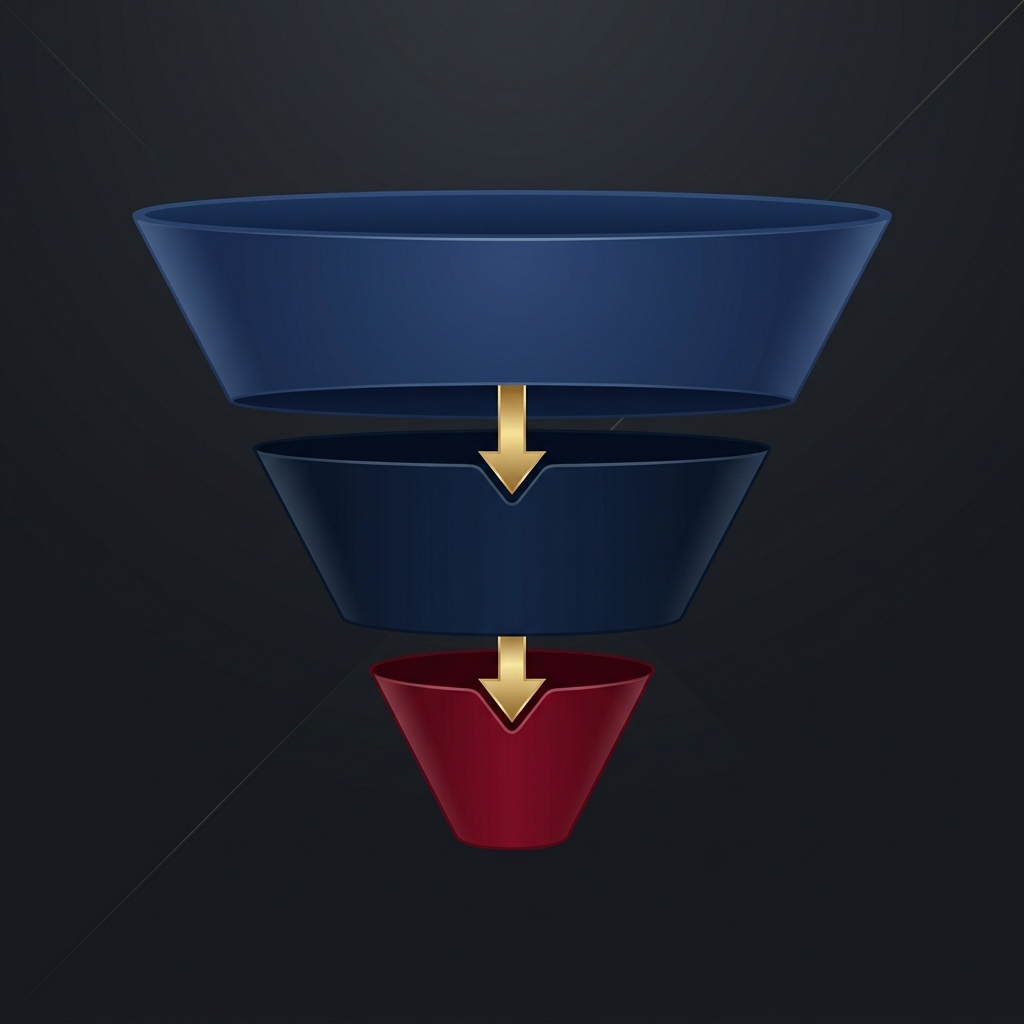
Layer 1 — Top of Funnel: Awareness & Inspiration (20–25% of budget)
Objective: Reach / Video Views / Brand Awareness
This layer introduces your property to potential guests who are in the inspiration and discovery phase — they know they want to travel but have not yet decided where. The creative should be aspirational, immersive, and emotionally compelling. Drone footage of the property, a 30-second 'day in the experience' reel, or a cinematic showcase of your most distinctive suite or view.
Budget allocation here is intentionally lean because its role is not to convert — it is to seed brand familiarity into the minds of your target audience. Users who engage with TOFU content (watch 25%+ of a video, visit your page) automatically feed into your MOFU retargeting audience. This is how the funnel builds momentum over time.
- Creative format: Reels (15–30 seconds), Cinematic video, Property showcase
- Audience: Cold — HNI targeting by geography, income proxy, travel behaviour
- KPIs to watch: CPM, 3-second video view rate, 25% video view rate, reach
- Frequency cap: 3–4 impressions per user per week — luxury brands must protect exclusivity
Layer 2 — Middle of Funnel: Consideration & Education (25–30% of budget)
Objective: Traffic / Lead Generation / Engagement
This layer targets users who have shown initial interest — they watched your video, visited your website, or engaged with your Instagram page. Now you deepen the relationship. Show them the specific experiences that differentiate your property: the private dining setup, the spa philosophy, the curated excursions, the unique architecture.
This is also where testimonials and social proof belong. A guest review from a recognisable context ('Featured in Condé Nast Traveller India'), a celebrity guest stay, or a notable award creates the credibility signal that moves a warm audience toward genuine consideration.
- Creative format: Carousel ads (room types, experiences), Lead form with soft offer, Collection ads
- Audience: Warm — Video viewers 25%+, Instagram page engagers, website visitors
- KPIs to watch: CTR, Cost per landing page view, Cost per lead, Time on site
Layer 3 — Bottom of Funnel: Conversion & Booking (45–50% of budget)
Objective: Conversions / Messages / Click-to-WhatsApp
This is where revenue is generated. Target users who visited your booking page, started a reservation and abandoned it, viewed a specific room type multiple times, or filled a lead form but did not follow through. The messaging here is direct, specific, and urgency-driven.
Dynamic Travel Ads are the most powerful tool in this layer — they automatically show users the specific room type or package they viewed on your website, combined with urgency triggers like availability indicators. These campaigns consistently achieve 2–4x higher conversion rates than standard website retargeting.
- Creative format: Dynamic Travel Ads, Click-to-WhatsApp, Single image with direct CTA
- Audience: Hot — Booking page abandoners, Lead form enquirers, Lookalikes of past guests
- KPIs to watch: CPL, CPA, ROAS, WhatsApp conversation rate, Booking confirmation rate
PRO TIP — Budget Distribution
New hotel accounts or properties launching their first Meta Ads strategy should start with 50% of budget in BOFU (retargeting existing website traffic and enquiry lists) and 50% in TOFU. This approach generates early ROAS wins while building the warm audience pools that feed the MOFU layer over time. As warm audiences grow — typically after 6–8 weeks — redistribute to the 20/25/50 split outlined above.
PART 3: Audience Targeting — Reaching the Right Guest Every Time
For a luxury hotel in India, audience targeting is not just a technical exercise — it is a brand decision. Every impression your ad receives is a statement about who your property is for. Reaching the wrong audience does not just waste ad spend; it actively signals to Meta's algorithm to find more people like the wrong audience, creating a compounding inefficiency that gets worse over time.
The HNI Audience Stack for Luxury Hotels
Layer these audiences in order of priority:
- Geographic Precision: Target within 20–30 km of affluent urban clusters. Feeder cities for luxury hotels: Mumbai (Bandra, Juhu, Worli, Cuffe Parade), Delhi (Golf Links, Vasant Vihar, Greater Kailash), Bangalore (Koramangala, Whitefield, Sadashivanagar), Hyderabad (Jubilee Hills, Banjara Hills), Pune (Koregaon Park, Kalyani Nagar).
- Income & Luxury Proxies: Target users with behavioural signals: luxury automobile brands, premium credit card usage, business class travel, international travel 2+ times per year, premium fashion and lifestyle brand engagement, high-end real estate enquiry history.
- Occasion-Based Layering: Overlay with anniversary, honeymoon, destination wedding planning, corporate retreat, and weekend staycation intent signals. These are the highest-conversion audience layers for luxury hotels.
- Lookalike Audiences: Build 1% lookalikes from your highest-value sources: confirmed direct booking guest list, your CRM database, Instagram followers who have messaged your page. These consistently outperform interest targeting by 2–3x on CPL.
- Corporate & MICE Targeting: Upload company email lists of target corporate accounts to reach travel managers, HR heads, and procurement teams. Create bespoke creatives about negotiated corporate rates, boardroom packages, and MICE facilities.
- International Feeder Markets: For resort properties, target NRI audiences in UAE, Singapore, UK, USA with campaigns promoting India homecoming travel, family reunion stays, and destination wedding planning.
What Not to Do With Targeting
Since Meta removed detailed targeting exclusions in March 2025, you can no longer directly block budget-conscious audiences. The workaround is creative-level filtering: when your ad's visual language, messaging, and implied price point communicate 'this property is ₹20,000 per night,' budget-oriented users self-select out. The creative must do the audience filtering that the platform no longer allows you to do manually.
AGENCY INSIGHT
For one of our luxury resort clients in Rajasthan, we built a lookalike audience from 1,200 confirmed direct booking records exported from the PMS system. This audience delivered a CPL of ₹380 — compared to ₹1,100 from interest-based targeting on the same campaign budget. First-party data from your PMS, CRM, and reservation system is the single most valuable targeting asset a luxury hotel possesses. If you are not using it in your Meta Ads strategy, you are competing with one hand tied behind your back.
PART 4: Creative Strategy — What Actually Works for 5-Star Properties
Luxury is experienced before it is analysed. A guest deciding between two premium properties will make an emotional decision — and your Meta Ads creative is the primary instrument through which that emotion is created. This is not about beautiful photography for its own sake. It is about engineering desire with precision.
The Creative Hierarchy for Luxury Hotels
Every piece of Meta Ad creative for a luxury hotel must accomplish four things in sequence: stop the scroll, create desire, build credibility, and trigger action. If any of these steps fail, the creative fails — regardless of how beautiful the property looks.
What Performs — Ranked by Engagement and Conversion
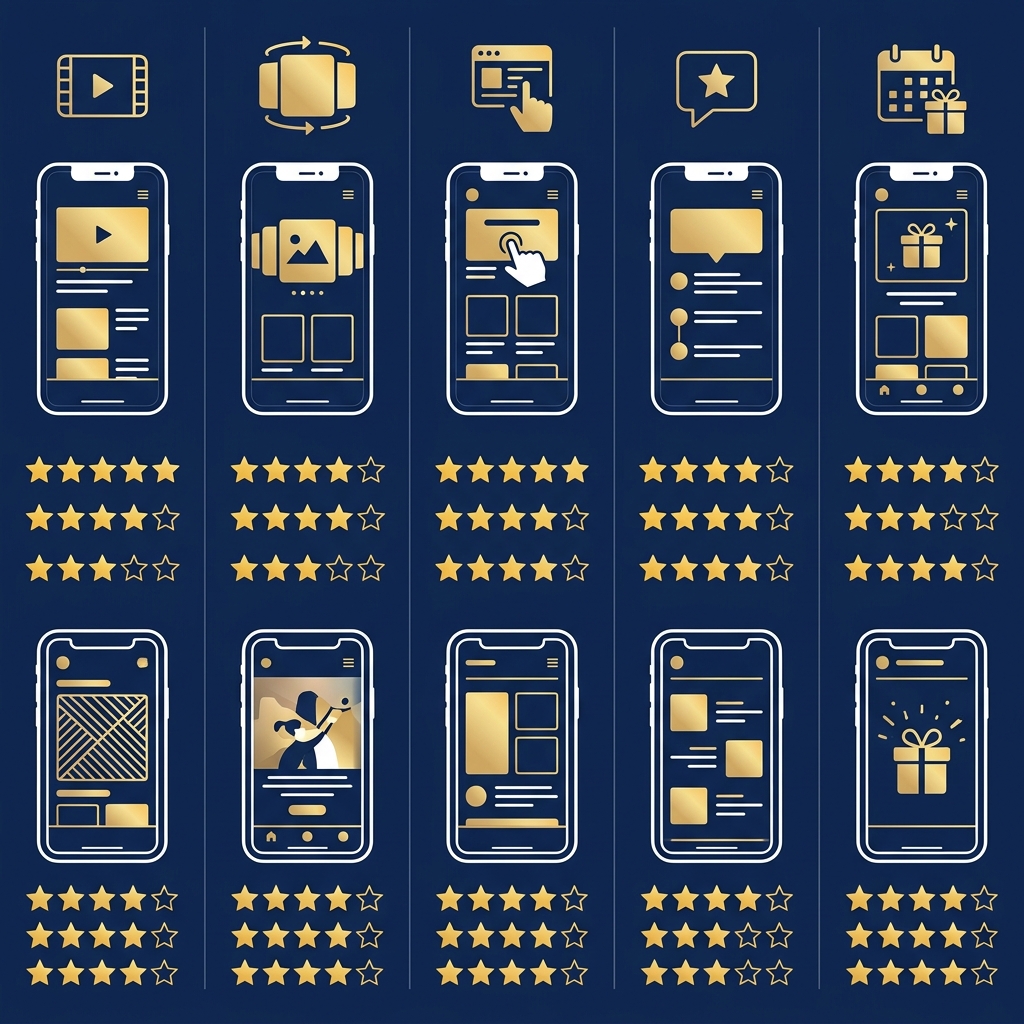
- Cinematic property reels (15–30 seconds): The highest-performing awareness creative. Not a promotional video — a sensory experience. Drone approach to the property, smooth interior walkthrough, signature dish being plated, spa treatment ritual, sunset from the best vantage point. No voiceover. Music only. Text overlay: the feeling, not the features.
- Room reveal carousels: Swipeable showcases of suite types from exterior to interior. Each slide a single wow-element: the bathtub view, the private plunge pool, the handcrafted headboard, the breakfast in bed setup. These perform best in MOFU campaigns targeting users who have already visited the property website.
- Experience narrative videos (45–60 seconds): A day-in-the-life of the perfect stay. Check-in arrival moment. Lunch at the signature restaurant. Spa at golden hour. Cocktails at the rooftop bar. Private butler service. These ads perform exceptionally well for honeymoon and anniversary targeting — they allow the viewer to imagine themselves inside the experience.
- Social proof single images: A pull quote from a recognisable media outlet or a guest review overlaid on a stunning property image. 'Best resort experience in India — Condé Nast Traveller' on a full-bleed image of your infinity pool. Simple, credible, and extraordinarily effective in MOFU campaigns.
- Occasion-specific creative: Wedding season? Show the mandap setup and reception hall. Diwali? Show the property lit in traditional décor for a festive dinner experience. Corporate retreat? Show the boardroom with city views and the team dinner on the terrace. Context-matched creative consistently outperforms generic property photography.
The Creative Rotation Rule
Luxury hotel campaigns suffer from creative fatigue faster than most categories because the audience sizes are smaller (you are targeting a niche, high-income segment) and impression frequency climbs faster. Rotate creative every 3–4 weeks. Monitor ad frequency — when it exceeds 2.5 impressions per user, the creative is fatiguing and costs will rise. Maintain a minimum library of 10–12 active creative assets at any time.
PRO TIP — The 3-Second Rule
In 2026, 65% of mobile video ad views end before the 3-second mark. For luxury hotel ads, the first frame must communicate premium instantly — not through a logo or a property name, but through visual language. An infinity pool at sunrise. A private villa door opening to a mountain view. Freshly plated amuse-bouche on fine china. These images communicate 'this is exceptional' before the viewer has processed a single word. If your first frame is a reception desk or a road approach shot — you have lost the audience in the first second.
PART 5: The India Revenue Calendar — Campaign Timing That Maximises ROAS
India's luxury hospitality market is uniquely seasonally driven. Wedding season, festive season, corporate MICE cycles, summer staycations, and monsoon retreats each represent distinct demand spikes with specific guest profiles, booking windows, and purchase motivations. A Meta Ads strategy that ignores the India hospitality calendar leaves significant revenue on the table.
The rule at ThePieCraftMarketing is simple: launch your campaign 8–10 weeks before peak demand, not 1–2 weeks before. By the time a luxury guest sees your ad, considers your property, discusses it with their partner, and makes a booking decision, 6–8 weeks have passed. Starting campaigns late means fighting for a guest who has already booked elsewhere.
| SEASON / PERIOD | CAMPAIGN STRATEGY |
|---|---|
| Q1 (Jan–Mar): High Season & Weddings | Peak domestic luxury travel. Wedding season at full throttle across Rajasthan, Goa, Kerala. Corporate retreats post-budget cycle. Launch campaigns in November targeting wedding planners, corporate travel managers, and leisure HNI couples. ADR at annual peak — protect rate integrity, no discount offers. |
| Q2 (Apr–May): Summer Staycation Push | Urban professionals escaping city heat. Target Mumbai, Delhi, Bangalore HNIs for hill station and coastal resort escapes. 'Summer in the Hills' and 'Family Staycation' campaigns. Child-inclusive experience creative. Offer value-adds (complimentary experiences, room upgrades) not rate cuts. |
| Jun–Jul: Monsoon Magic Campaigns | Underutilised season for most hotels — major opportunity. Kerala backwaters, Coorg plantation stays, Goa monsoon mood. Market the romance of the rain. Domestic couples are a core audience. Launch these campaigns in May when monsoon travel consideration begins. |
| Q3 (Aug–Sep): Early Festive & MICE | Corporate MICE season ramps. Conference and off-site bookings for Q4. Target HR Directors and corporate travel managers. Also: early Navratri and Durga Puja festive stays for heritage properties. Advance Diwali experience campaigns. |
| Q4 (Oct–Dec): Peak Revenue Season | Diwali, Christmas, New Year's Eve — the highest ADR period of the year. Every luxury hotel should run its most aggressive Meta Ads investment here. Launch Diwali campaigns in September. NYE campaigns in October. Wedding season campaigns throughout. Maximum budget. Premium creative. |
AGENCY INSIGHT
For a luxury heritage hotel in Rajasthan, we launched a New Year's Eve campaign on October 15th — 10 weeks before the event. By December 1st, 73% of the New Year's package inventory was sold out through direct Meta Ads leads, at the hotel's published rack rate, with zero OTA commission. The remaining 27% sold through OTAs in the final two weeks at a discounted rate. The hotel's GM calculated that the Meta Ads campaign saved the property ₹8.4 lakhs in OTA commissions on the NYE period alone — against a campaign spend of ₹1.2 lakhs. That is a 7x return on the campaign investment, measured in commission savings alone, before the actual room revenue ROAS is counted.
PART 6: Direct Bookings vs OTAs — How Meta Ads Shift the Balance Permanently
This is the commercial conversation that every luxury hotel owner should have with their marketing agency — and almost none do, because most agencies are not thinking about your P&L. They are thinking about your ad spend.
- 15–30%: OTA commission per booking
- 4.25%: Effective cost of direct booking via Meta Ads
- 50%: OTA cancellation rate vs 18% for direct
- ₹11L+: Annual savings from shifting 1/5 of OTA bookings to direct
The Real Mathematics of OTA vs Meta Direct
Let us run the numbers for a mid-sized luxury hotel generating ₹80 lakhs per month in room revenue, with 65% of bookings currently through OTAs at a 22% average commission.
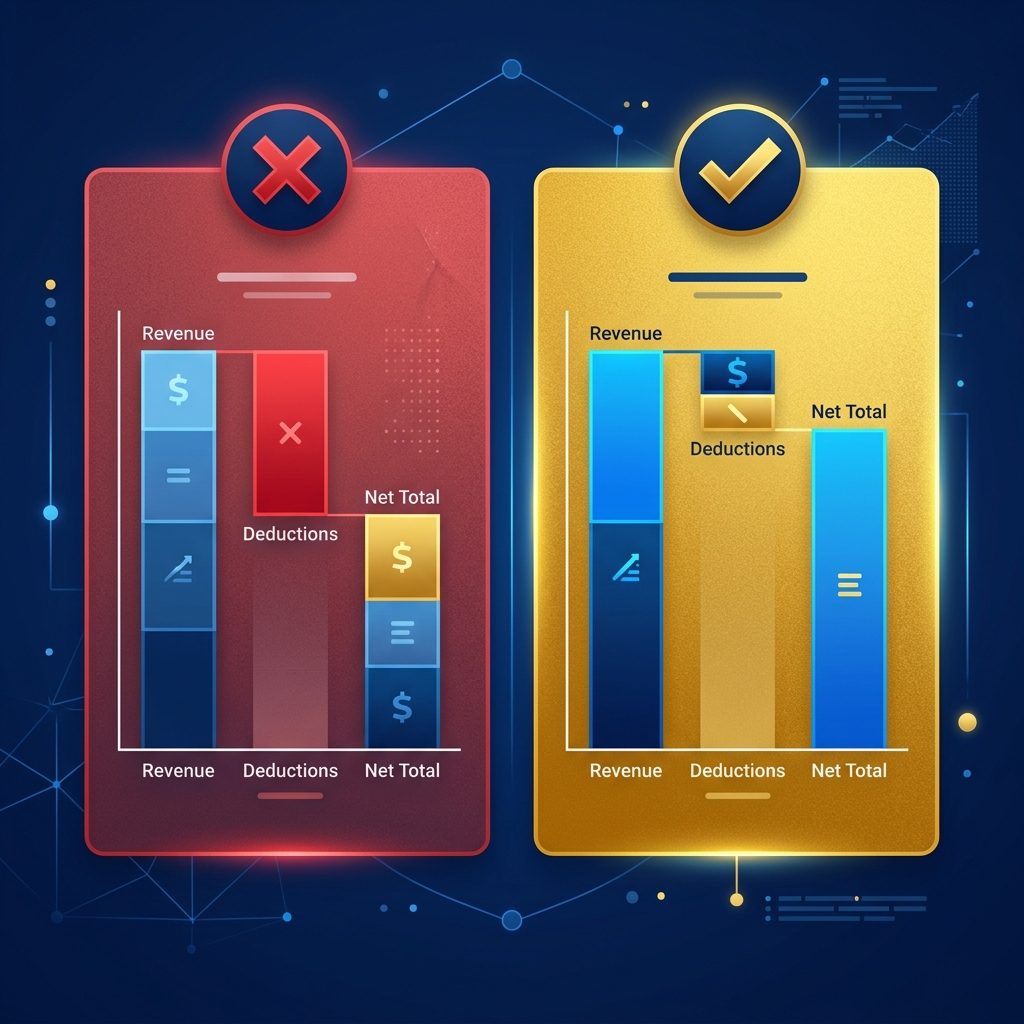
OTA commission cost: ₹80 lakhs × 65% OTA share × 22% commission = ₹11.44 lakhs per month in commission paid to third-party platforms. That is ₹1.37 crore per year handed to OTAs.
A Meta Ads campaign generating 30 direct bookings per month at ₹25,000 ADR × 2 nights average stay = ₹15 lakhs in direct room revenue per month. At a ₹1,500 CPL and 30 leads converting at 40% to confirmed bookings, the campaign spend is approximately ₹1.1 lakhs. Effective cost of acquisition: 7.3% of revenue — versus 22% for OTA.
The gap between those two percentages — 7.3% vs 22% — is the operating profit that a well-executed Meta Ads strategy returns to your P&L.
The Billboard Effect — Working With OTAs, Not Against Them
Research shows that 65% of direct bookings come from guests who first discovered the hotel on an OTA. This 'billboard effect' is real — OTAs function as a discovery platform that luxury hotels can leverage. The strategic play is to maintain OTA presence for discovery while driving confirmed bookings through direct channels. Meta Ads are the bridge: a guest discovers you on Booking.com, searches your property name on Instagram, sees your Meta ad for a direct booking offer with a room upgrade incentive, and books directly.
This is not anti-OTA strategy. It is smart revenue management — using every discovery channel and converting the booking through the channel that maximises your net revenue per room night.
PART 7: Measuring What Matters — The KPIs Every Hotel GM Must Track
Most Meta Ads dashboards show metrics that are meaningless for hotel revenue management: page likes, post reach, and engagement rate. These are not business outcomes. A luxury hotel GM needs to track performance in the language of hospitality — RevPAR, ADR, direct booking rate, and commission savings — not just CPM and CTR.
Here is the complete KPI framework we use for every luxury hotel client at ThePieCraftMarketing:
| KPI | TARGET & EXPLANATION |
|---|---|
| Cost Per Lead (CPL) | Target: ₹800–₹1,800 for luxury segment. The cost to generate one confirmed enquiry — WhatsApp conversation, lead form submission, or direct call. This is your primary efficiency metric. |
| Lead-to-Booking Conversion Rate | Target: 30–50% for qualified HNI leads. Tracks what percentage of Meta Ad leads convert to confirmed reservations. Low conversion = follow-up problem, not ads problem. |
| Return on Ad Spend (ROAS) | Target: 8x–15x for full-funnel campaigns. Total room revenue generated by Meta Ad leads divided by total campaign spend. The foundational revenue metric. |
| Cost Per Acquisition (CPA) | Target: ₹2,500–₹6,000 per confirmed booking. Total spend divided by confirmed bookings generated. Compare against OTA commission cost per booking to prove ROI. |
| Direct Booking Rate (DBR) | Target: Increase by 15–25% year-on-year. Percentage of total bookings that are direct vs OTA. Meta Ads should show a clear positive correlation with DBR growth. |
| Commission Savings | Track monthly: (OTA bookings converted to direct) × (avg OTA commission %). This makes the P&L impact of Meta Ads tangible for ownership and GM reporting. |
| WhatsApp Conversation Rate | Target: >35% of ad clicks initiating a WhatsApp conversation. India-specific metric — the leading indicator of bottom-funnel health for luxury hotel campaigns. |
| Creative Frequency | Monitor weekly. Keep below 2.5 per user. Above this threshold, costs rise and conversions fall. The trigger for creative rotation. |
PRO TIP — Monthly Reporting for Hotel GMs
At ThePieCraftMarketing, every hotel client receives a monthly performance report in hospitality-native language. Not just CPL and ROAS — but RevPAR influence (estimated uplift from direct bookings vs blended ADR), commission savings in absolute rupees, and direct booking rate trend. When a GM can see that Meta Ads saved ₹6.8 lakhs in OTA commissions last month, the conversation about budget is very different from when the only metric on the table is 'cost per click.'
Frequently Asked Questions: Meta Ads for Luxury Hotels in India
How much should a luxury hotel spend on Meta Ads per month in India?
For a standalone luxury property with ADR between ₹10,000–₹25,000 per night, a minimum effective Meta Ads budget is ₹2–3 lakhs per month. For properties with multiple revenue centres (rooms, F&B, spa, weddings, MICE), we recommend ₹4–6 lakhs per month across structured campaigns. At these budget levels, a well-architected campaign should generate 8x–15x ROAS — meaning ₹3 lakhs in spend should produce ₹24–45 lakhs in attributable direct booking revenue.
How long does it take for Meta Ads to drive direct hotel bookings?
The first confirmed direct bookings from a properly structured campaign typically appear within 2–4 weeks of launch. Full campaign optimisation — where the algorithm has sufficient conversion data to self-optimise effectively — takes 6–8 weeks. The warm audience pools that feed retargeting campaigns grow over 4–8 weeks. Plan for a 60-day runway to full performance marketing rather than expecting immediate ROI from day one.
Can Meta Ads work for boutique luxury properties, not just large hotel chains?
Yes — and often more effectively. Boutique luxury hotels have a more defined and differentiated brand story than chain properties, which makes for more compelling Meta Ad creative. The authenticity of a family-owned heritage haveli or a boutique eco-resort resonates powerfully with India's growing HNI segment, which is increasingly seeking uniqueness over brand recognition. Meta Ads give boutique properties direct access to this audience without the legacy distribution disadvantage of not being on every GDS system.
Should luxury hotels use Reels or static images for Meta Ads?
Both, strategically. Reels — short cinematic videos of 15–30 seconds — are the highest-performing format for awareness campaigns. They have the lowest CPMs on Instagram in India (35% cheaper than feed placement) and the highest engagement rates. Static images and carousels perform better for consideration and conversion campaigns, where the user has already shown interest and is examining specific details. A complete creative strategy uses Reels for TOFU, carousels for MOFU, and a mix of both for BOFU.
How do we track which hotel bookings came from Meta Ads specifically?
Proper attribution requires three integrations: (1) Meta Pixel installed on your booking engine and website with custom events for room view, booking initiation, and booking confirmation. (2) Conversions API (CAPI) connected to your property management system (PMS) to pass server-side booking data back to Meta. (3) UTM parameters on all ad links to track bookings in Google Analytics. With all three in place, you can attribute individual bookings to specific campaigns, ad sets, and creatives — and calculate exact ROAS at the campaign level.
The Strategic Imperative: Own Your Guest Relationship
The India luxury hotel market will reach nearly USD 7 billion by 2031. The UHNW guest segment is growing at 50% over the next three years. Domestic luxury travel demand has never been stronger. The opportunity is exceptional.
But every booking that goes through an OTA is a booking where the guest relationship belongs to Booking.com — not to your hotel. OTAs mask guest email addresses, restrict loyalty program access, and build cancellation and rebooking behaviour that reduces your revenue predictability. Every OTA booking is a guest you will have to pay 22% to acquire again next time they travel.
Meta Ads, executed with the full-funnel architecture described in this post, do the opposite. They build a direct relationship — through your Instagram, your WhatsApp, your booking engine — that belongs to your property. The guest who discovers you through a Meta Ad and books directly is yours. You have their contact information, their stay history, and the opportunity to market to them at a fraction of OTA cost for every future stay.
Three things to act on today: First, audit your current OTA commission cost for the past 12 months — the number will surprise you. Second, check whether your Meta Pixel is installed and firing correctly on your booking engine. Third, identify the top 3 occasions your property is best suited for in the next 90 days and plan your first campaign around the highest-value one. For an overview on what NOT to do, read our guide on 7 Meta Ads Mistakes That Are Killing Your Revenue.
Ready to Reduce OTA Dependency and Fill Rooms Directly?
ThePieCraftMarketing runs Meta Ads exclusively for luxury hotels, fine dining restaurants, and premium resorts. Book a free 30-minute strategy call — we will audit your current Meta setup, calculate your OTA commission cost, and show you the direct booking revenue your property should be generating.
ready to apply these exact strategies?
we help luxury hotels & fine dining venues drive predictable direct revenue.