7 Meta Ads Mistakes That Are Killing Your Restaurant's Revenue — And How to Fix Them
Most fine dining restaurants waste 70% of their Meta ad budget on 7 avoidable mistakes. Learn what they are and how to fix them.
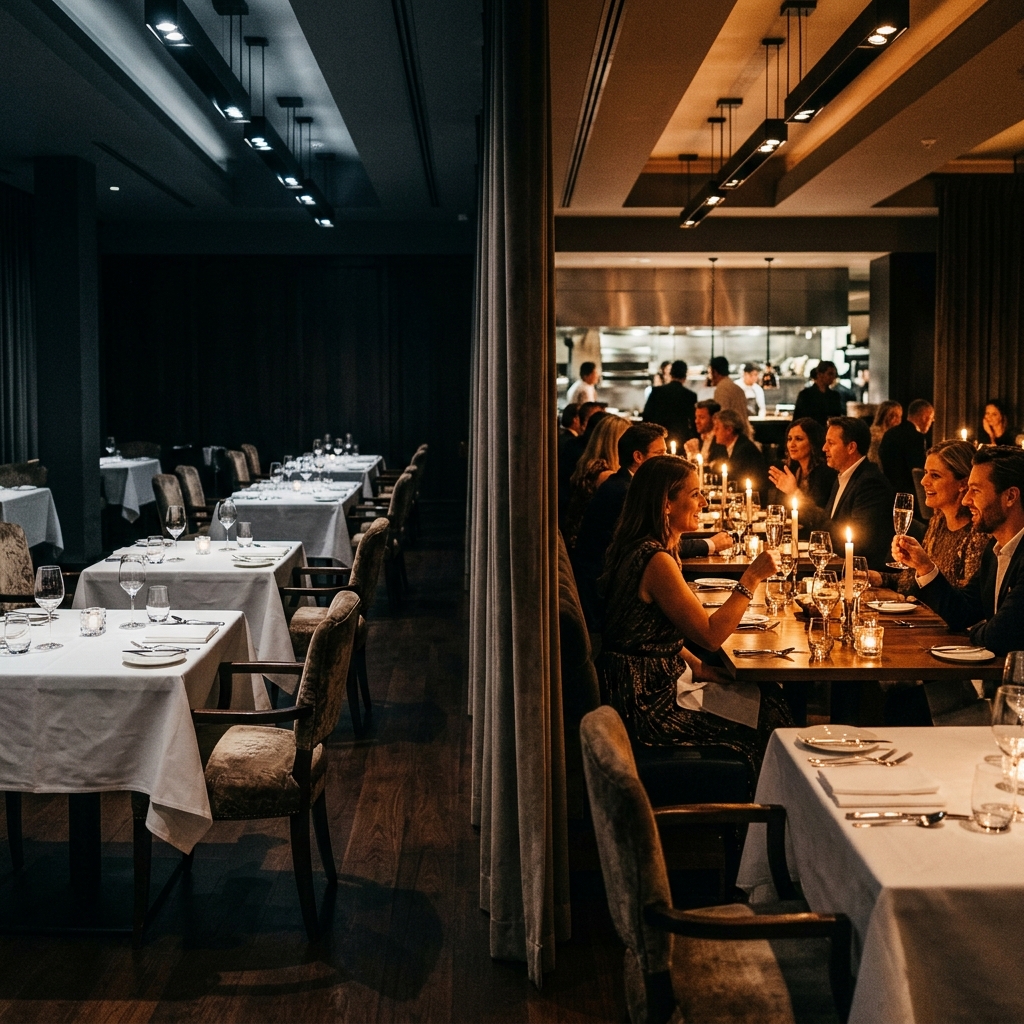
Here is an uncomfortable truth: most fine dining restaurants and luxury hotels running Meta Ads are funding their competitor's growth — not their own.
Every month, premium F&B owners across Mumbai, Delhi, and Bangalore pour lakhs of rupees into Facebook and Instagram ads, stare at the results, and wonder why the tables aren't filling. The creative looks stunning. The audience feels right. The budget is there. And yet — the high-value bookings aren't coming.
The problem is almost never the platform. Meta Ads, when executed correctly, consistently deliver 5x to 12x ROAS in the hospitality sector. Hospitality, Travel & Tourism as a category averages 12.9x ROAS globally. Fine dining and luxury hotel campaigns that are built correctly regularly exceed those benchmarks in India.
The problem is execution — specifically, seven execution mistakes that are so common we see them in almost every new client account we audit at ThePieCraftMarketing.
Read this post carefully. By the end, you will know exactly what is draining your ad budget, diluting your brand, and filling your restaurant with the wrong kind of guests — or worse, keeping it empty. We don't just run ads. We engineer revenue. This is how.
The difference between Meta Ads that waste money and Meta Ads that fill tables.
MISTAKE #1: You're Boosting Posts — Not Running Real Campaigns
Let's start with the most widespread mistake in restaurant marketing. If you have ever tapped the blue 'Boost Post' button below a beautiful food photograph on your Instagram page — you have already made this mistake.
Boosting a post is not running a Meta Ads campaign. It is, at best, paying Meta to show your content to more people who are unlikely to book a table. At worst, it is actively burning your ad budget on engagement metrics — likes, comments, and shares — that have zero correlation with reservation revenue.
Why Boosted Posts Don't Drive Revenue
When you boost a post, Meta restricts your campaign objectives to Engagement or Reach. Both are awareness-level objectives. The algorithm optimises to find people who are most likely to tap a heart on your photo — not people who are most likely to make a reservation or enquire about a table for eight.
When you run a proper Meta Ads campaign through Ads Manager, you choose objectives like Lead Generation, Conversions, or Messages. The algorithm optimises for the outcome you actually care about. The difference in ROAS is not marginal — it is catastrophic.
4.87x vs 0.52x
Median ROAS: Sales-objective campaigns vs. Traffic/Engagement campaigns
Meta, 2025 benchmark data
That means for every ₹1 lakh you spend boosting posts, a properly structured campaign with the right objective could be generating nearly 10x the revenue. For a fine dining restaurant spending ₹2-3 lakhs per month on Meta, that gap translates to crores in missed bookings annually.
The Fix
Stop boosting posts entirely. Move every rupee into Ads Manager. Structure your campaigns with Lead Generation or Message objectives for reservation enquiries, and Conversions for direct booking links. Use boosted posts only for very specific awareness spikes — a new menu launch, a press feature, a grand opening — and only alongside a full campaign structure, never as a substitute for one.
★ AGENCY INSIGHT At ThePieCraftMarketing, the first thing we do when auditing a new client account is check what percentage of their historical ad spend went into Boost Post versus Ads Manager campaigns. In 80% of restaurant accounts we audit, more than half the total spend over the past 12 months was wasted on boosted posts. We've seen restaurants spend ₹5 lakhs per month for an entire year on boosts — that's ₹60 lakhs with almost nothing to show for it except Instagram likes.
MISTAKE #2: Targeting Broad Audiences Instead of High-Intent HNI Diners
Your restaurant is not for everyone. A fine dining concept at ₹4,000 per cover is not for the family looking for a Sunday thali. A luxury rooftop bar is not for the college student searching for happy hour deals. Yet most restaurant Meta Ads campaigns are built with audience targeting so broad that they actively attract exactly these people — and repel the high-net-worth individuals (HNIs) you are trying to reach.
In March 2025, Meta removed detailed targeting exclusions from Ads Manager. This means you can no longer block audiences based on interest categories the way you once could. This change confused many agencies and restaurant owners into assuming that precise audience targeting was dead. It is not — but it requires a completely different architecture.
The Real Cost of Wrong Audience Targeting
When your ads reach the wrong audience, two things happen simultaneously. First, your cost per lead (CPL) skyrockets because the people seeing your ads are unlikely to convert. Second, and more damaging for premium brands, your creative is being consumed by users who would never dine at your establishment. Every impression on the wrong person is an impression that weakened your brand positioning without generating any commercial return.
India's Meta CPM for restaurant ads averages approximately ₹730 per 1,000 impressions. If 60% of those impressions are landing on the wrong audience — people outside your target income bracket, outside your delivery radius, or outside your occasion profile — you are burning ₹438 out of every ₹730 spent.
How to Target HNI Diners Correctly in 2026
Effective audience architecture for premium F&B in India requires a layered approach:
- Geographic precision: 5–8 km radius around affluent pin codes. In Mumbai, this means Bandra, Juhu, Worli, Lower Parel, Colaba. In Delhi: Golf Links, Vasant Vihar, Chanakyapuri, Khan Market. In Bangalore: Koramangala, Indiranagar, Whitefield.
- Income and behavioural proxies: Target users of premium credit cards, frequent international travellers, luxury automobile owners, and users of high-ticket e-commerce categories.
- Lookalike audiences built on first-party data: Your existing guest list, reservation system exports, and Instagram page followers are gold. Build 1% lookalikes off these lists — these audiences outperform interest targeting in every test we have run.
- Occasion layering: Layer anniversary dining, corporate dining, fine dining interests, and premium gifting behaviours to sharpen intent signals.
★ PRO TIP For luxury hotel clients, we consistently find that targeting users with international travel history in the last 6 months and premium credit card usage outperforms any interest-based audience by 3-4x on CPL. These users have demonstrated willingness to spend on premium experiences — which is the only audience signal that matters for high-ticket F&B.
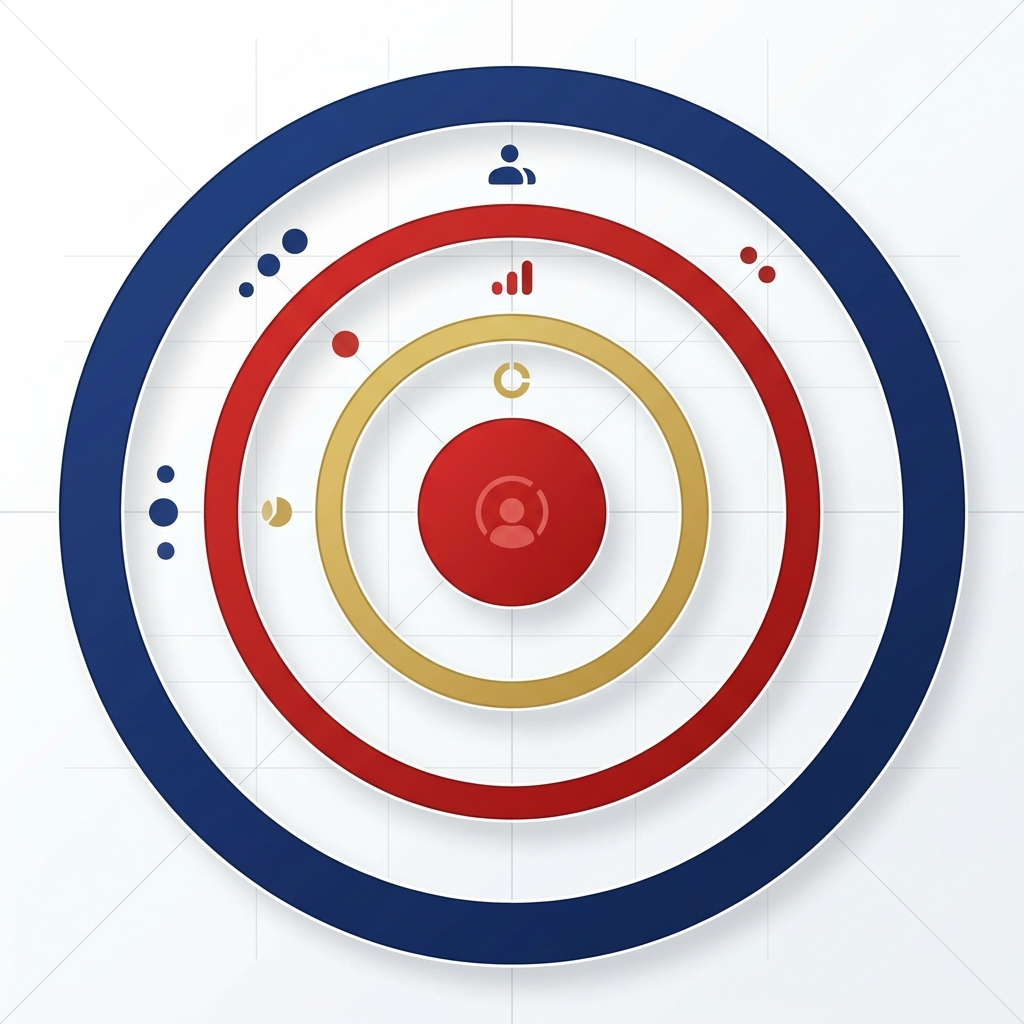
The HNI Audience Architecture
MISTAKE #3: Running Creative That Looks Beautiful but Converts Nobody
There is no shortage of stunning restaurant photography on Instagram. Moody plating shots. Golden-hour terrace views. Dishes that look like art installations. Your restaurant probably has all of this. And if you are using this content in your Meta Ads without any strategic framework, you are making one of the most expensive creative mistakes in the industry.
Beautiful creative and converting creative are not the same thing. A photograph of your truffle risotto might stop a user mid-scroll — but if it does not communicate a compelling reason to act right now, the scroll continues and your ₹15 CPM impression has produced exactly zero revenue.
The Creative Hierarchy That Actually Works for Fine Dining
Effective Meta Ad creative for premium restaurants and luxury hotels follows a specific hierarchy. The creative must stop the scroll, establish the positioning, create desire, and then trigger an action — all within the first 3 seconds of a video or the first glance at a static image.
In 2025, Meta's algorithm evolved to interpret signals within creative content to decide who to show it to. An ad featuring a relaxed couple celebrating an anniversary in a candlelit setting will be algorithmically distributed to users who match that behavioural and emotional profile. The creative is now also the targeting.
The Biggest Creative Mistakes in Restaurant Meta Ads
- No hook in the first 3 seconds: 65% of video ad views on Instagram end before the 3-second mark. If your first frame does not communicate value or create intrigue, you have lost the viewer.
- Generic food photography with no context: A beautiful dish means nothing without the story — who this is for, what the occasion is, why this restaurant is different.
- Weak or absent calls-to-action: 'Visit us tonight' is not a CTA. 'Reserve your table for this Saturday — only 4 covers remaining' is a CTA.
- Running the same creative for months: Creative fatigue is responsible for the majority of ROAS declines. When the same ad is shown repeatedly, engagement drops and Meta increases your costs to reach the same audience.
- AI-generated images: More than 30% of consumers are less likely to choose a brand when its advertising looks AI-generated. For luxury restaurants and hotels, this number is even higher. Your guests are paying for authentic, curated experiences — your creative must reflect that.
★ AGENCY INSIGHT We refresh creative for every client every 3–4 weeks. The moment frequency (average number of times a single user sees the same ad) crosses 2.5, we rotate to new creative. For fine dining clients, we maintain a library of 12–15 active creative assets per campaign — so there is always fresh, premium-feel content delivering. This single discipline has reduced CPL by an average of 34% across our client accounts compared to agencies that run static creative for months.
MISTAKE #4: No Retargeting Stack — Abandoning 97% of Your Warm Audience
Here is a number every restaurant owner should memorise: on average, only 3% of people who interact with your ads convert on the first touchpoint. The other 97% — people who watched your video, clicked your ad, visited your booking page, or saved your Instagram post — leave without acting. Most restaurants never show these people another ad. They are gone forever.
This is the single most profitable missed opportunity in restaurant Meta Ads. Retargeting campaigns targeting warm audiences — people who have already expressed intent by interacting with your brand — deliver 40 to 60% lower cost per acquisition compared to cold prospecting campaigns. People who have already seen your brand are 70% more likely to convert.
The Full Retargeting Stack for Fine Dining and Luxury Hotels
A complete retargeting architecture for premium F&B has three layers:
- Video viewers (25%–75% watched): These users showed enough interest to keep watching. They are familiar with your brand but need a stronger reason to act. Retarget with social proof — a guest review, a media feature, an awards mention.
- Website visitors and booking page abandoners: Anyone who visited your reservation page but did not complete a booking is a high-intent lead. Retarget with urgency messaging — 'Last 6 covers this Saturday.' These campaigns consistently produce our highest ROAS across all client accounts.
- Instagram engagers and page visitors: Users who followed your page, saved a post, or sent a DM. These are brand-warm audiences. Retarget with a specific offer or occasion-based campaign.
40–60%
Lower cost per acquisition from retargeting vs. cold prospecting campaigns
Meta benchmark, 2025
For a fine dining restaurant spending ₹3 lakhs per month on Meta Ads with zero retargeting, building a retargeting stack typically reduces the effective CPL by 40% within the first 30 days. That is ₹1.2 lakhs in recaptured efficiency from a single structural change.
★ PRO TIP Retargeting is where 80% of your reservation conversions should come from. Cold prospecting fills the top of your funnel. Retargeting is where you actually close the table booking. Most restaurant agencies only build cold prospecting campaigns — which is why most restaurant campaigns underdeliver. Build the full funnel.
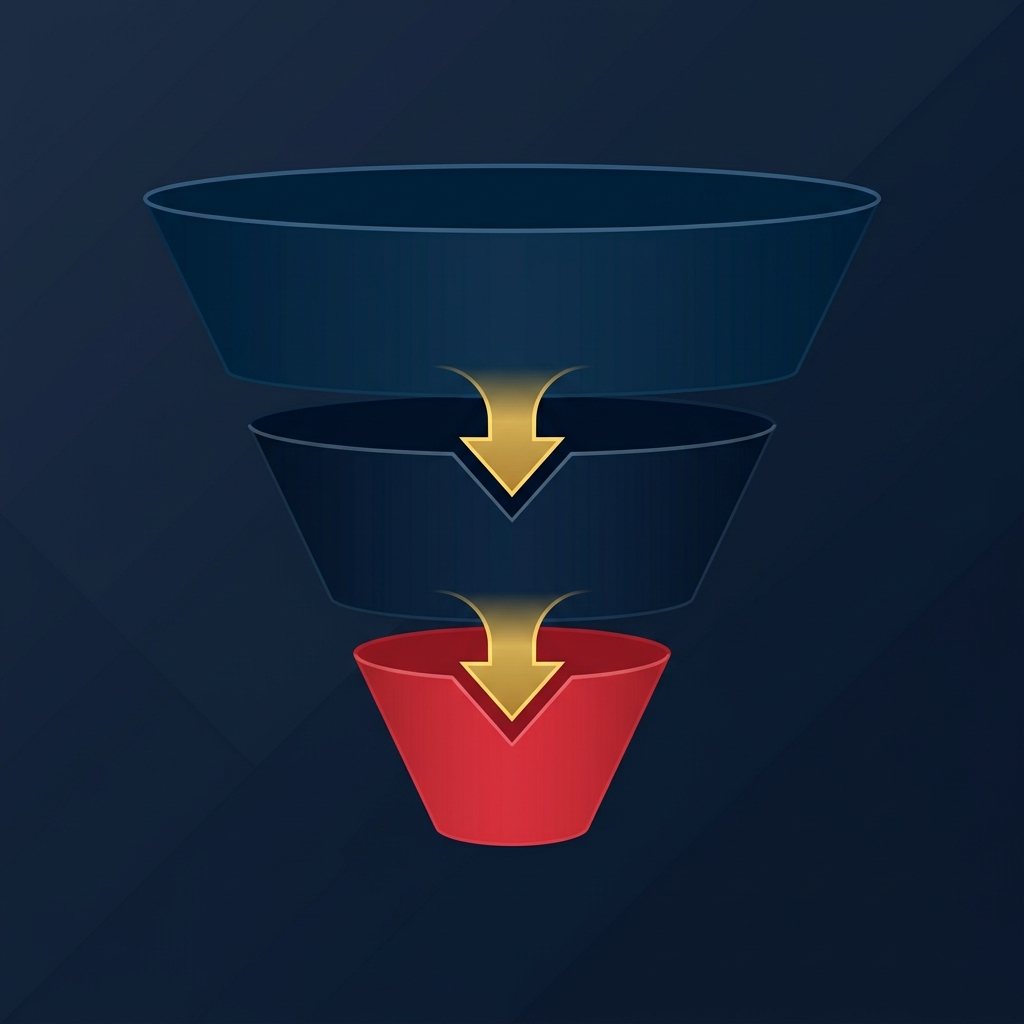
The three-layer funnel: Cold Prospecting, Warm Retargeting, and Hot Retargeting
MISTAKE #5: Wrong Offer — Discount Positioning That Destroys Premium Brand Equity
This mistake does not just waste your ad budget. It actively damages your brand.
A significant percentage of premium restaurants and luxury hotels, under pressure to show results from their Meta Ads, resort to discount-led offers. A complimentary starter. A 20% off for two. A buy-one-get-one happy hour. On the surface, these offers seem logical — give people a reason to come in. In reality, they achieve exactly the opposite of what a premium positioning strategy requires.
Why Discount Offers Destroy Fine Dining Brands
When you run a discount offer in your Meta Ads, the algorithm optimises to find the people most likely to respond to that offer. These are, by definition, deal-seekers — not the high-value guests who will order the premium wine pairing, return for their anniversary, or recommend your restaurant to their HNI network.
Beyond the algorithmic damage, there is the brand positioning damage. Every time a guest sees your restaurant associated with a discount, their mental model of what your restaurant is worth shifts downward. Luxury is partly a function of perceived scarcity and exclusivity. Discounting is the fastest way to destroy both.
What Actually Works Instead of Discounts
The most effective offers for premium restaurant Meta Ads add value without reducing price:
- Exclusive access: 'Reserve the chef's table — only available to our Meta audience this month.'
- Experience upgrades: 'Complimentary wine pairing consultation with your reservation.'
- Priority booking: 'Book now to secure the last Saturday evening seats before public availability.'
- Occasion positioning: 'The city's most celebrated anniversary dining experience — enquire now.'
- Events and experiences: Launch a special tasting menu, a visiting chef dinner, or a sunset cocktail series — and market access to these events, not a discounted version of your standard offering.
The goal is to make the guest feel that responding to your ad gives them privileged access to something exceptional — not that they are getting a deal. That is the difference between marketing a premium brand and accidentally repositioning yourself as a mid-market one.
MISTAKE #6: No Meta Pixel — Running Blind Without Performance Data
Would you run a ₹3 lakh per month marketing campaign without knowing which ads generated reservations? Rationally, the answer is obviously no. Yet that is precisely what happens when you run Meta Ads without a properly configured Meta Pixel installed on your website.
The Meta Pixel is a piece of tracking code placed on your website that tells Meta exactly what users do after clicking your ad — whether they visited your reservations page, started a booking, completed a booking, or left. Without this data, Meta's algorithm cannot optimise your campaigns for the outcomes you care about. It is running blind.
What a Broken or Missing Pixel Costs You
In 2026, Meta's attribution updates changed how CPAs are calculated, causing apparent CPAs to look 15–30% higher in many accounts. For restaurant owners and agencies not paying close attention, this created the false perception that campaigns were underperforming — leading to budget cuts that compounded the problem.
A properly configured Pixel combined with Conversions API (CAPI) — Meta's server-side tracking solution — restores this data accuracy and gives the algorithm the conversion signals it needs to optimise effectively. CAPI is particularly important in India, where iOS privacy changes have significantly reduced browser-side tracking accuracy.
The Pixel Setup Every Restaurant Needs
- Pixel installed on all key pages: homepage, menu, reservations/booking, thank you/confirmation.
- Custom events firing on: reservation page view, booking initiation, booking completion, WhatsApp click.
- Conversions API (CAPI) integrated: with your booking system or CRM to pass server-side data.
- Event deduplication configured: to avoid double-counting conversions.
- Pixel health check monthly: verify all events are firing correctly in Events Manager.
★ AGENCY INSIGHT In 60% of restaurant accounts we onboard, the Pixel is either missing entirely or misconfigured — firing only on the homepage and nothing else. This means the campaign is getting credit for zero conversions, the algorithm has no signal to optimise on, and all budget is being wasted on early-funnel delivery. The Pixel is not optional. It is the foundation of every profitable Meta Ads campaign.
MISTAKE #7: Ignoring the WhatsApp Layer — Where Indian Diners Actually Convert
This mistake is uniquely costly for restaurants in India. Meta Ads in the Indian hospitality market do not operate the way they do in Europe or the US. In India, the reservation and enquiry journey runs primarily through WhatsApp — not through an online booking form, not through a phone call, and not through an email.
Indian diners, particularly in the HNI segment, want to confirm availability, ask about private dining options, and establish a personal connection before committing to a reservation at a premium establishment. WhatsApp is the channel where this happens. Yet the majority of restaurant Meta Ads campaigns in India drive traffic to a website or a basic lead form — and leave the WhatsApp layer completely unbuilt.
The WhatsApp Conversion Architecture
An effective WhatsApp-integrated Meta Ads funnel for Indian fine dining works as follows:
- Click-to-WhatsApp campaigns: Your Meta ad's CTA opens a pre-populated WhatsApp conversation directly. The friction of finding a number, opening WhatsApp, and composing a message is eliminated. One tap and the lead is in conversation.
- Pre-written opening messages: Configure the auto-populated message to establish context immediately. 'Hi, I saw your ad for [occasion/event]. I'd like to enquire about a reservation.' This allows your team to respond to a warm, pre-qualified lead instantly.
- Automated WhatsApp response within 5 minutes: Leads that receive a response within 5 minutes are 9x more likely to convert. Configure a basic auto-reply that acknowledges the enquiry and sets expectations for when to expect a personal response.
- WhatsApp broadcasts for retargeting: Build a WhatsApp broadcast list from all enquiries and re-engage with seasonal campaigns, new menu launches, and exclusive events. This is the lowest-cost, highest-conversion marketing channel available to Indian restaurants. For a full guide on building this channel, read our WhatsApp Marketing for Restaurants playbook.
9x
Higher conversion rate when leads receive a WhatsApp response within 5 minutes
India's digital ad market crossed Rs 78,000 crore in 2025 and is projected to reach Rs 95,000 crore in 2026. WhatsApp commerce and messaging are capturing an increasing share of this spend because they deliver conversion rates that no other channel matches for high-consideration purchases like fine dining and luxury hotel stays.
★ PRO TIP For every fine dining and luxury hotel client we manage, Click-to-WhatsApp is always the primary CTA for bottom-of-funnel campaigns. In our experience, WhatsApp lead campaigns consistently produce 35–45% lower CPL than equivalent lead form campaigns in India's premium F&B segment — because the quality of the conversation and the speed of conversion is fundamentally higher.

The WhatsApp conversion funnel flow
What These 7 Mistakes Are Costing You — The Full Picture
Let's make this concrete. A fine dining restaurant in Mumbai spending ₹3 lakhs per month on Meta Ads, making all seven mistakes described in this post, is operating at approximately 15–20% of the efficiency their budget should deliver.
They are paying for impressions that reach the wrong audience. They are optimising for engagement instead of reservations. Their creative fatigues within weeks and they do not rotate it. They have no retargeting stack, so 97% of warm leads evaporate. Their offers are either absent or discount-led. Their Pixel is misconfigured so the algorithm cannot optimise. And their WhatsApp layer is unbuilt, so enquiries that do come in take 12–24 hours to get a response.
The same ₹3 lakhs, deployed correctly, should generate ₹15–25 lakhs in reservation revenue at a 5x–8x ROAS. The gap between those two numbers — ₹15–25 lakhs in revenue versus the near-zero that broken campaigns deliver — is the true cost of these mistakes.
This is not a hypothetical. These are the numbers we see every time we audit and rebuild a restaurant Meta Ads account at ThePieCraftMarketing.
Frequently Asked Questions: Meta Ads for Restaurants in India
How much should a restaurant spend on Meta ads per month?
For a premium fine dining restaurant in a Tier 1 Indian city, a minimum effective budget is ₹1.5–2 lakhs per month. Below this threshold, the algorithm does not have enough data to optimise effectively. For luxury hotels with multiple revenue streams (rooms, F&B, events), we recommend a minimum of ₹3–5 lakhs per month across structured campaigns.
What is a good ROAS for restaurant ads?
For fine dining and luxury hospitality, a well-structured Meta Ads campaign should target 5x–8x ROAS. Top-performing campaigns in premium hospitality regularly achieve 10x–12x. If your campaigns are below 3x ROAS consistently, your campaign structure, audience targeting, or creative strategy needs a rebuild — not more budget.
Should a restaurant use Instagram ads or Facebook ads?
Both platforms should be used simultaneously within the same campaign, as Meta's delivery optimisation will allocate spend to wherever your target audience is most active. For premium audiences aged 28–45 in India's metros, Instagram (Feed and Reels) typically drives stronger engagement. Facebook delivers better cost efficiency for retargeting. Reels placements in India currently have CPMs 35% cheaper than feed placements — making them essential for awareness-stage campaigns in 2026.
How long does it take to see results from restaurant Meta Ads?
With a correctly structured campaign — proper objectives, targeted audiences, Pixel tracking, and a retargeting stack — most premium restaurants see measurable improvement in CPL within 2–3 weeks. Full campaign optimisation, where the algorithm has accumulated sufficient conversion data, typically takes 4–6 weeks. Patience through this learning phase, without constant budget changes or creative swaps, is critical.
Can Meta Ads work for small fine dining restaurants with limited budgets?
Yes, but the structure and execution quality must be proportionally higher when budgets are limited. A ₹1.5 lakh per month budget will not allow for broad audience testing — it must be allocated to the highest-intent audiences from day one, with a tight retargeting structure and immediate WhatsApp follow-up. Every rupee must work harder. This is precisely the scenario where specialist agency expertise delivers the highest ROI.
The Bottom Line: Stop Guessing With Your Marketing Budget
Meta Ads remain the single most powerful performance marketing tool available to fine dining restaurants and luxury hotels in India. The platform has the audience reach, the targeting capability, and the conversion infrastructure to fill your tables with high-value guests consistently — if you know how to use it.
The seven mistakes in this post — from boosting posts to abandoning the WhatsApp layer — are not advanced technical failures. They are fundamental strategic errors that most restaurant owners make because they are either not aware of them or are working with agencies that do not specialise in premium hospitality.
- Takeaway 1: Structure drives results. A ₹1 lakh campaign with the right objectives, audiences, and creative will outperform a ₹5 lakh campaign built incorrectly every time.
- Takeaway 2: The full funnel matters. Cold prospecting without retargeting is like filling a bathtub with the drain open. Build the complete stack.
- Takeaway 3: WhatsApp is non-negotiable for Indian fine dining. Integrate it at every stage of your Meta Ads funnel or accept a permanently higher CPL.
Is Your Restaurant Making These Mistakes Right Now?
If you run a fine dining restaurant or luxury hotel and you are ready to stop guessing with your marketing budget — let's talk. Book a free 30-minute strategy call with ThePieCraftMarketing and we will audit your current Meta Ads account, identify exactly what is costing you covers, and show you the revenue your campaigns should be generating.
ready to apply these exact strategies?
we help luxury hotels & fine dining venues drive predictable direct revenue.